Nasty Canuck Weekly — October 25, 2026
Steel, aluminum, ports and trade: the week's Canadian investment stories, the evidence still missing, and what we're watching next.
Canada Is Building. Now Comes the Test.
From the Desk
It was a busy week for Canadian industry — and an even busier one for the people announcing investments in it. Ottawa and Ontario outlined support for steel, automobiles and northern roads. Ottawa announced support for aluminum projects in Quebec. Ottawa and New Brunswick also outlined a corridor package for Saint John.
There is substance in these stories, but the price tags don't all mean the same thing. Some projects were underway before the latest announcements. Others still need agreements, approvals, customers or construction. Promised jobs and production are not the same as jobs and production already in place.
That gives us a useful Sunday reading assignment: look past the cheque presentation and follow what Canada can actually build, move and sell. Here's where we'd start.
The Big Read
Canada's $8.7-Billion Industrial Plan Has Three Very Different Jobs
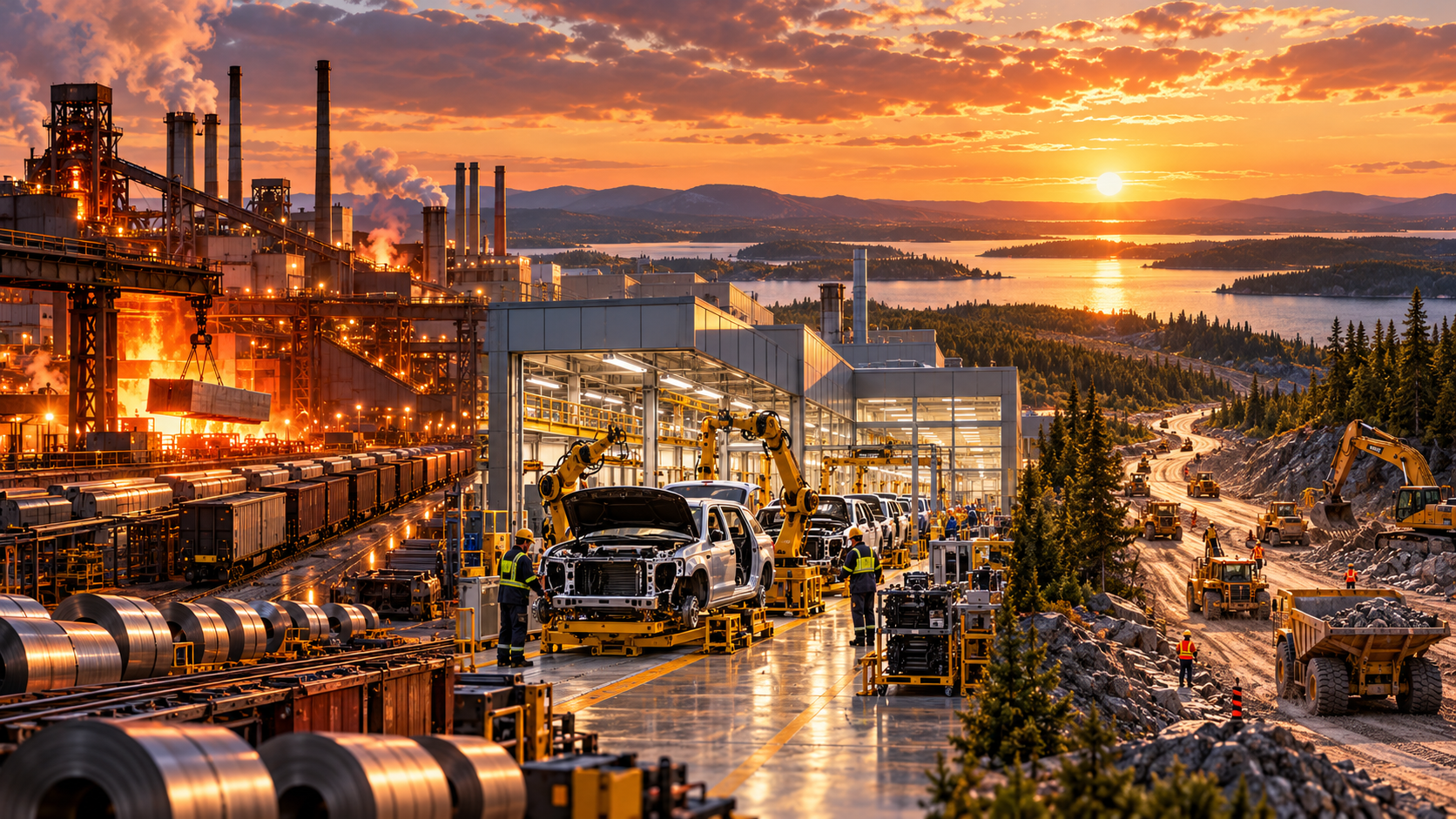
A steel mill, an auto plant and a northern access road have very different jobs — and very different clocks. Ottawa and Ontario bundled them into an industrial plan worth up to $8.7 billion, with money for steel modernization, automotive investment and roads serving the Ring of Fire region.
Our explainer pulls those commitments apart. It looks at which funding is new, what remains conditional and how to measure progress without counting a proposal as a finished factory or road. The public should eventually be able to see the orders won, the projects delivered and the communities served.
Read the industrial-plan explainer
Also Worth Your Time
Quebec aluminum has a backstory
Ottawa's $193.3-million contribution supports work at four Rio Tinto facilities and Aluminerie Alouette. But important projects at Alma and Grande-Baie were announced years earlier. We trace that history and ask what the funding changes, including the terms Canadians may eventually be able to verify.
Read the Quebec aluminum story
From forest fibre to the electricity grid
Hitachi Energy plans to make specialized electrical insulation from wood fibre in London, Ontario. The proposed plant would supply an earlier link in the chain: electrical-grade pressboard used inside transformers. Canadian supplier contracts, qualified products and actual production are the milestones to watch.
Saint John's next bottleneck isn't just a dock
The Port of Saint John already has substantial container-handling capacity. A $463-million corridor package is aimed at the less glamorous connections — shipping access, inspections, rail and roads — that help turn that capacity into reliable cargo movement. More room means little without dependable service and customers.
Follow the Saint John corridor
Canada and Türkiye signed a framework. Contracts come next.
New arrangements cover trade discussions, aviation rights, financing cooperation and other sectors. They open doors for Canadian businesses. The next evidence will come from operating flight schedules, financed projects and signed customer contracts, rather than the ceremonies themselves.
Read the Canada–Türkiye explainer
Who carries the risk in Canada's space economy?
Ottawa is consulting on a possible Space Act, with licensing, oversight and commercial responsibility among the questions. Our Commentary asks how a growing domestic space industry should make responsibility clear before something goes wrong. The consultation has not become law.
Explore the space-policy question
Canadian Momentum — with the fine print
Two other stories show why industrial capability belongs in the conversation. Washington has raised import-security questions involving wind equipment. Our wind-tower story examines where Canadian steel fabrication fits and distinguishes security concerns from tariff measures. Meanwhile, the Bombardier story follows jobs in Wichita to show why cross-border manufacturing rarely stops neatly at the border.
Examine the wind-tower question · Read the Bombardier follow-up
What We're Watching
Alberta's official referendum count — October 29. Elections Alberta reported on October 24 that procedural errors delayed parts of the unofficial count. The next milestone is its official, question-by-question results. That is the basis for any responsible follow-up, especially on the non-binding separation-related question. See Elections Alberta's count update.
The U.S. tariff schedule — October 30. A new U.S. proclamation changes which Canadian product classifications face additional Section 338 duties beginning October 30. The practical question for exporters is which exact products are added or removed, and what other duties may still apply. Read the official proclamation.
Until Next Week
A dollar figure gives us the beginning of a story. The equipment, the cargo, the customers and the people doing the work give us the rest. The next time a project appears in the headlines, we want to know what actually changed — and who can show us.
We’ll keep reading past the podium.
Polite. Persistent. Proudly Canadian.