The Bombardier Threat Ran Into American Jobs
The U.S. president has stepped back from a threat against Bombardier. Its Kansas workforce helps explain the change—and how cross-border industry can protect jobs on both sides.
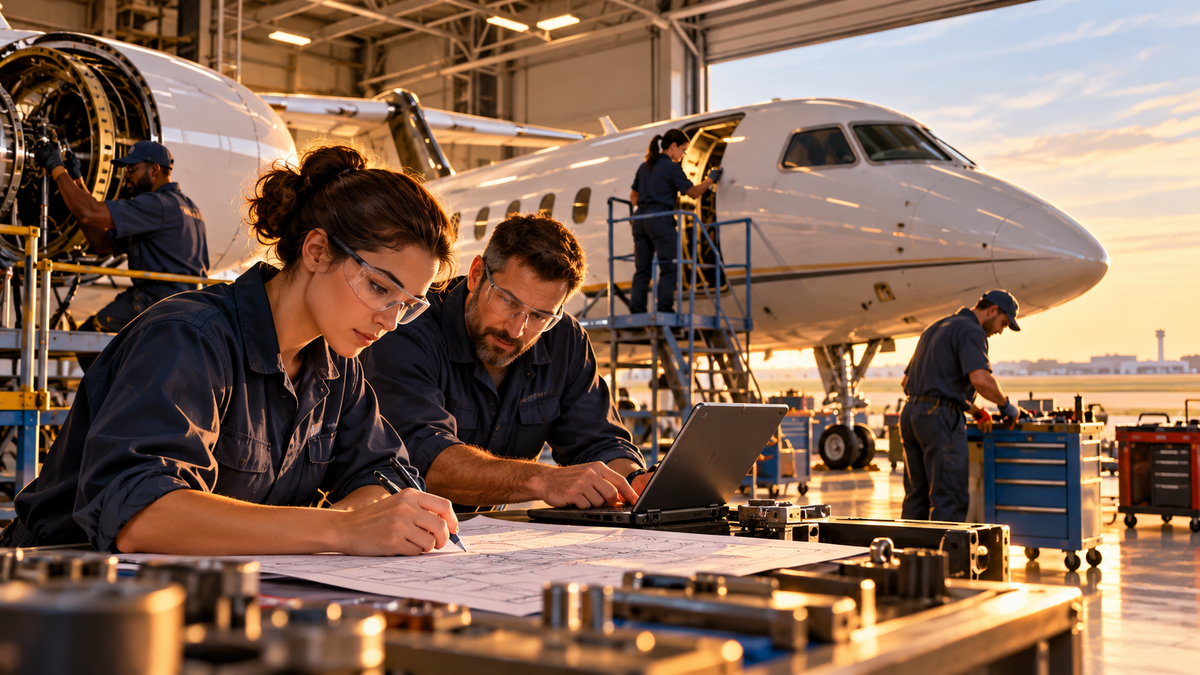
When Washington threatened a Canadian jet maker, Kansas found itself in the flight path. That made the argument considerably less tidy than it first sounded.
On Monday, October 19, the U.S. president stepped back from his September threat to bar Bombardier aircraft from the American market. In an interview with Wichita's 12 News, he indicated that the company would not be hurt because of its Kansas presence. He repeated the point at a rally near Wichita, where Republican Senator Roger Marshall was campaigning for re-election. Marshall had been among the Kansas politicians who opposed the earlier threat.
The jobs behind the intervention
In an October 15 announcement, Bombardier outlined approximately $50 million in Wichita investments, including a newly opened training centre, an expanded wheel-and-tire operation and future capabilities. The company says it employs about 1,500 people in Kansas and 3,500 across the United States. Wichita also houses its U.S. headquarters and Bombardier Defense operations.
That gives local officials a stake in what happens to this Canadian manufacturer. Wichita's aerospace jobs, training facilities and maintenance work are part of Bombardier's business, not an unrelated side venture. A restriction on the company's access to American customers could carry consequences for American workers too.
Nasty Canuck examined Bombardier's substantial American operations in September, when the original threat emerged. We had also reported on its plan to bring a critical Canadian aerospace operation in-house. This week's development adds something new: the company's U.S. workforce became part of the political argument inside the United States itself.
A threat withdrawn, not a ban repealed
The distinction matters. Reuters reported that no action had been taken against Bombardier under the September threat. Its aircraft already had U.S. Federal Aviation Administration approval, and an earlier February threat to decertify Bombardier jets had likewise failed to materialize.
The October remarks therefore did not restore a cancelled licence or repeal an enacted ban. They signalled a change in the president's position. That is welcome for Bombardier, but political assurances are not a substitute for predictable market access.
What Kansas tells Canada
Canada and the United States have built industries whose workers, suppliers and customers depend on one another. That integration creates vulnerabilities when market access becomes a political weapon. It also gives people on both sides of the border practical reasons to speak against disruption.
Kansas offers a useful example. American employment gave local politicians a reason to intervene on behalf of a Canadian company. It would be a mistake, however, to assume that such support is guaranteed, or that Canada no longer needs to protect its own aerospace skills, engineering and manufacturing capacity.
The lesson is more useful than a simple victory lap. Canada benefits from strong American partners and from retaining the ability to build sophisticated aircraft here. Wichita showed that the economic stakes run in both directions—and that a Canadian manufacturer's American employees can have a voice when those ties are threatened.