Hockey Night in Canada Needs More Than Nostalgia
The PWHL offers CBC a new Saturday-night chapter. The bigger challenge is keeping hockey open to people who have not become paying fans.
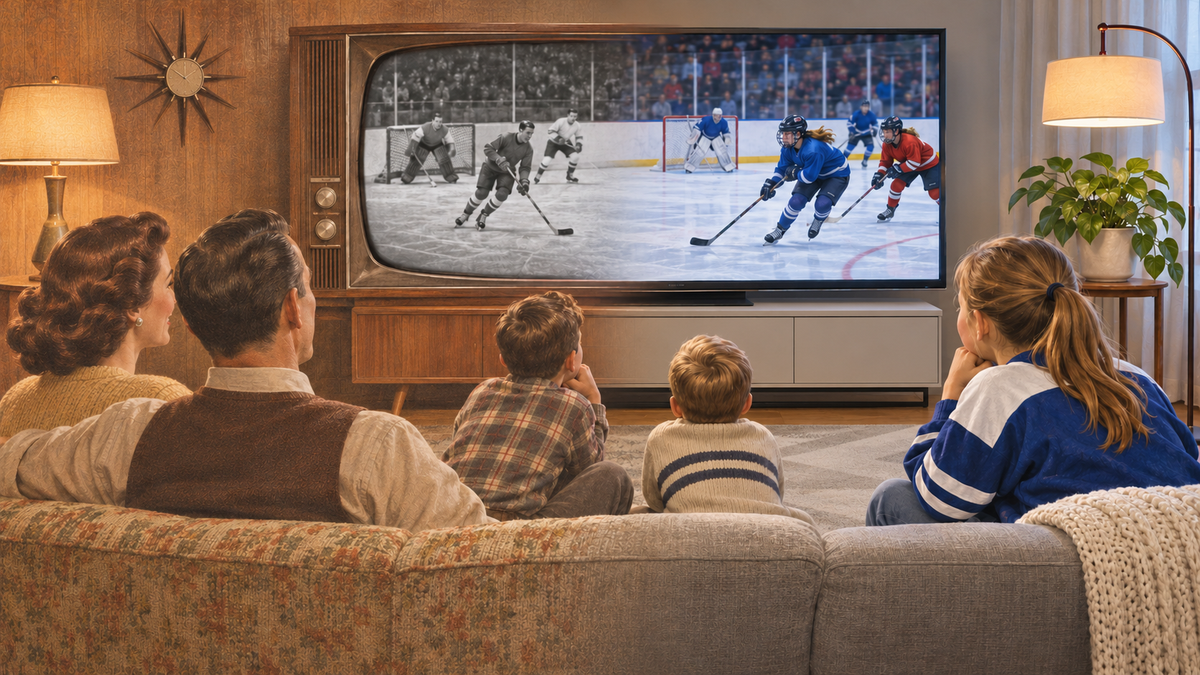
NHL games have left CBC, while the PWHL arrives under a familiar banner in December. Preserving a shared Saturday night means keeping it easy to join.
For decades, Saturday-night hockey brought family and friends together in Canadian living rooms, with the television on and somebody claiming their usual chair. If you were lucky, your favourite team was playing. If you weren’t, there was usually somebody else’s team to cheer against. The person who knew every player could share the couch with someone who was mostly there for the company.
On June 16, Sportsnet and CBC announced the end of their 12-year National Hockey League (NHL) broadcast partnership. For viewers accustomed to finding an NHL game on CBC, a familiar Saturday-night invitation was being withdrawn.
An established fan has a reason to sort through packages and schedules. A casual viewer first needs a reason to care. Asking that person to buy a sports subscription before encountering an NHL game raises the price of curiosity.
A national habit meets a monthly bill
An Angus Reid Institute survey conducted October 19–22 found that 74 per cent of respondents who follow the NHL regarded the loss of its traditional CBC broadcast as a major blow to hockey’s traditions. Among that same group, 78 per cent disliked additional subscription requirements even when they meant more games were available. The weighted online-panel survey included 1,806 Canadian adults; those two findings concern NHL followers, rather than the entire sample.
The new viewing arrangements explain the frustration. For English-language national coverage, Sportsnet’s 2026–27 viewing guide directs viewers to Sportsnet for Saturday hockey, Sportsnet+ exclusively on Mondays, and Prime Video for national Wednesday games. An existing television subscription does not necessarily cover the Monday stream: Sportsnet lists a C$12.99 monthly add-on for television subscribers who do not qualify for included access. Its standalone Sportsnet+ Standard plan is listed at C$34.99 a month or C$269.99 a year.
Those are different routes into the season, with different costs depending on what a household already buys. An occasional Saturday viewer does not need every service. Watching the NHL’s Saturday broadcast now means having access to a paid service, whether through an existing package or a new subscription. Following games across the week adds more arrangements to understand.
The commercial case deserves a fair hearing. Rogers’s 12-year, C$11-billion national rights agreement begins with this season, and the company promises more national games and fewer regional blackouts. Streaming can also suit viewers who prefer it to a television package. There is real value in letting an established fan watch more of the teams they already follow.
Canadians can share hockey without agreeing on a favourite club. As we argued in our earlier Nasty Canuck commentary, Who Gets to Be Canada’s Team?, local rivalries can be part of a healthy national sports culture. A shared Saturday night can accommodate different jerseys and languages. It is the opportunity to take part that deserves protecting.
The PWHL gets its own Saturday night
The Professional Women’s Hockey League (PWHL) season schedule assigns CBC 26 Saturday games, including eight primetime Hockey Night in Canada broadcasts. The first is Montréal Victoire against Hamilton on December 5 at 7 p.m. Eastern. In the opening-weekend announcement, CBC describes the partnership as providing free access to the hockey.
Amy Scheer, the PWHL’s executive vice-president of business operations, said the opportunity would help the league “connect with our fans and forge new traditions together.”
Putting professional women’s hockey in that slot is a chance to make a national habit bigger. Girls should be able to grow up seeing women as the Saturday-night main event. Longtime hockey fans can discover another league without surrendering the team they already love. These players deserve the preparation, analysis and promotion that make a broadcast feel like an occasion worth returning to.
There is an audience to earn. The same survey’s published tables show 64 per cent of respondents supported more television coverage for women’s professional sports, while 20 per cent said they would definitely or probably watch a PWHL game that season. Support for the idea and an intention to tune in are different things. Broadcasters have to give people reasons to care about particular players, rivalries and games, then make the next broadcast easy to find.
The PWHL opportunity and the loss of easy NHL access belong in the same conversation. Welcoming one need not require shrugging at the other.
Give the next fan a way in
For the NHL and its rights holders, there is a strong cultural case for negotiating a regular window that viewers can watch without a sports subscription. Which games it includes, who carries them and how the arrangement is paid for are practical negotiating questions. A national audience includes people who are not yet sufficiently committed to buy a package; reaching them should count for something alongside revenue from those who are.
A new generation can have different heroes on the screen and still find a place on that couch. Keep the invitation open, and the person who came for the company might end up staying for the game.