A $182-Million Steel Order Links the Soo to Canada’s Icebreakers
A mill needs a market, and a shipyard needs dependable plate. Canada’s icebreaker programme is bringing those requirements together.
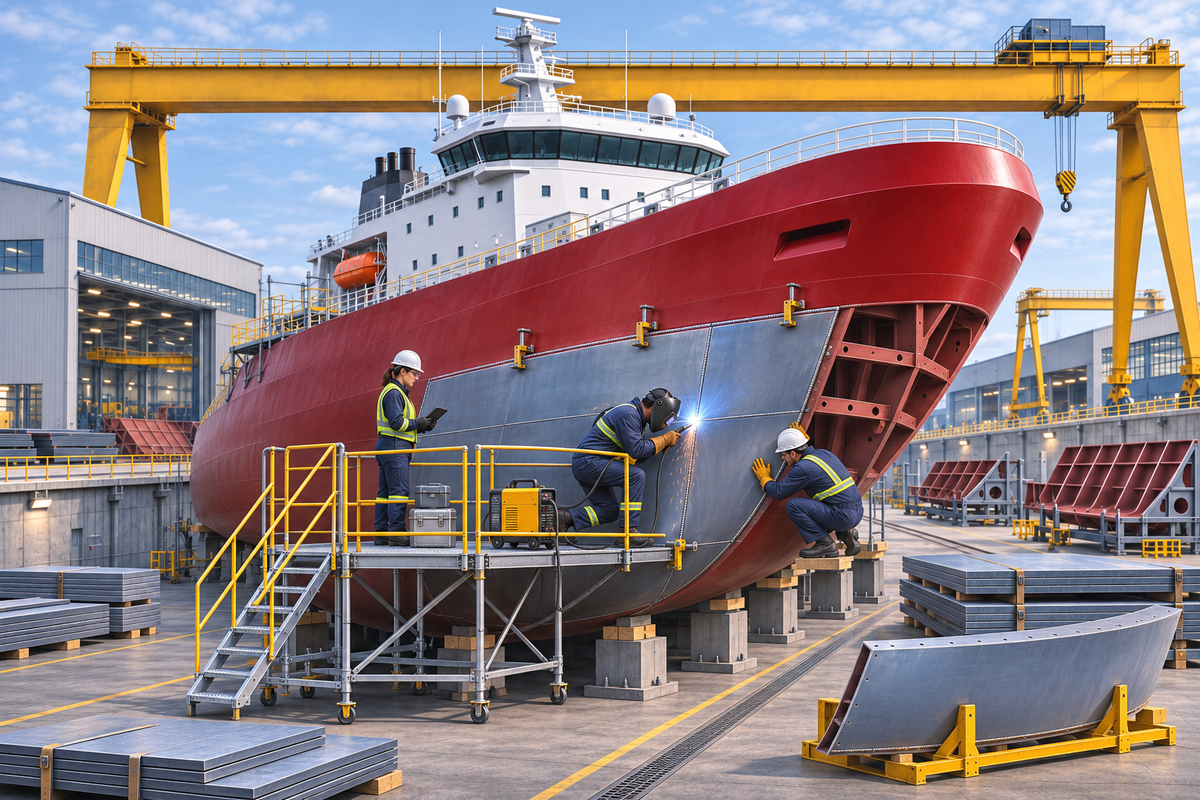
Seaspan’s agreement with Algoma and Stigterstaal connects Ontario steelmaking with British Columbia shipbuilding. It gives the Coast Guard’s fleet renewal a practical role in developing a Canadian market for steel.
Seaspan has named Algoma Steel and Stigterstaal Canada as the primary steel plate suppliers for up to six Canadian Coast Guard multi-purpose icebreakers. The November 3 agreement, valued at about $182 million, covers up to 24,000 metric tonnes of Canadian-made structural steel. Algoma will produce the steel, Stigterstaal brings marine steel processing and distribution expertise, and Seaspan will build the vessels in British Columbia.
For Algoma’s home city of Sault Ste. Marie, the order creates a connection to work far beyond the mill. A Canadian public-service fleet needs new ships; a Canadian steelmaker needs customers. The agreement brings those needs together through the companies responsible for turning plate into vessels.
The connection had to be built
The relationship began with a more preliminary task. In July 2025, the three companies signed a memorandum of understanding to assess whether Algoma could supply steel to Seaspan through Stigterstaal. That work initially centred on Seaspan’s separate heavy polar icebreaker. The companies were to examine technical, commercial and logistical requirements, with Stigterstaal acting as the commercial and logistical subcontractor.
Those requirements help explain why buying Canadian involves more than choosing a supplier’s address. The steel has to suit the vessel and arrive when the builder needs it, under an arrangement both sides can carry out. Connecting production with the requirements of a marine customer is part of developing a domestic market. It gives the businesses between a mill and a shipyard a practical job in making that relationship work.
A customer for Algoma’s changed business
Algoma is seeking precisely this kind of domestic demand. In its October 28 financial results, the company described a shift towards Canadian customers and steel plate as U.S. tariffs restrict its traditional export market. It also reported that all liquid steel produced in the third quarter came from its first electric arc furnace, with the second furnace producing its first steel in October.
The same results recorded a $129.6-million net loss for the quarter ended September 30. The company is rebuilding its business around a different production process and customer base. The icebreaker agreement gives it an opportunity to earn revenue from Canadian shipbuilding as that transition proceeds.
Nasty Canuck’s earlier examination of steel tariffs and the costs borne by metal-using manufacturers showed why a mill’s gains and its customers’ interests need to be considered together. In shipbuilding, the order gives steel a purpose while leaving the builder responsible for obtaining suitable material at a price and pace the programme can carry.
The ships have a public job to do
The multi-purpose icebreakers belong to a planned fleet of up to 16 vessels, intended for work ranging from Arctic icebreaking to shipping assistance and flood control in the St. Lawrence and Great Lakes. Their duties also include search and rescue, emergency response and maintaining marine navigation aids. Buying the ships serves an operating need as well as an industrial one.
That need is pressing. The Coast Guard’s 2026–27 business plan describes aging vessels becoming more expensive to maintain and more frequently unavailable because of unscheduled repairs. The plan includes awarding the build contract for the first group of six multi-purpose icebreakers, while continuing to maintain older ships until their replacements arrive.
The steel purchase and the federal shipbuilding contract are separate milestones. National Defence’s May 2026 briefing placed the start of construction on the first multi-purpose icebreaker in 2027. That is a published plan, not a construction start confirmed by this week’s announcement.
Seaspan’s disclosed quantities and vessel count are upper limits; the announcement does not break out firm and optional portions, payment timing or a plate-delivery schedule. Those details will determine how the order becomes production and revenue. Canadians also have an interest in the cost and delivery of the ships that will eventually use it.
If the relationship works through successive builds, the benefit can outlast this order. Algoma would gain experience supplying a demanding marine programme, while Seaspan would have a domestic producer increasingly familiar with its requirements. The lasting industrial value lies in making that working relationship repeatable.