A Grocery Store Can Offer a Deal. Can It Advertise It?
Canada's competition watchdog is examining rules that can keep lower grocery prices out of flyers and apps. Would changing them help shoppers and smaller stores?
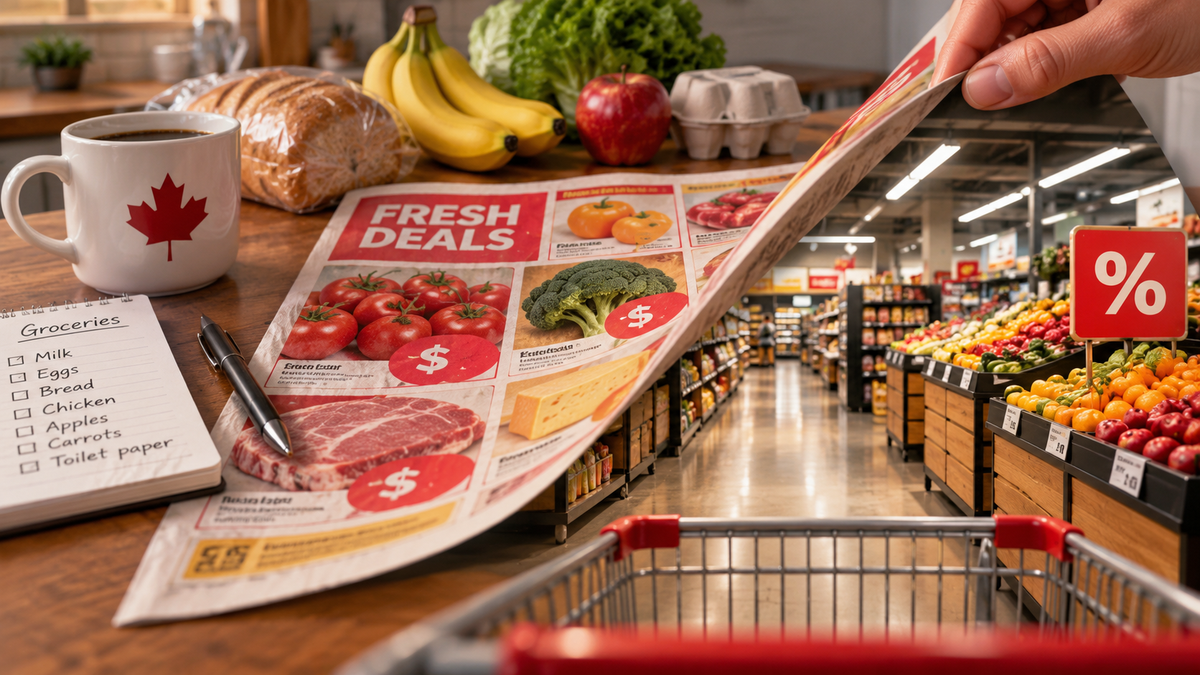
The grocery trip often starts at the kitchen table. You check a flyer, compare a few prices and decide which store is worth visiting. But that decision is harder to make if a store is prepared to charge less than it is permitted to advertise.
The Competition Bureau launched an investigation on September 28 into minimum advertised pricing policies in the grocery sector. These arrangements can restrict the price a retailer promotes for a supplier's product, even when the retailer is willing to sell it for less. The Bureau wants evidence about whether the restrictions keep bargains out of sight, discourage discounts or weaken competition.
This is not proof that a particular grocer has broken the law. It is an investigation into a practice that raises a practical question for anyone trying to stretch a grocery budget: how do you compare stores when the advertised price might not be the lowest one available?
The advertised price isn't always the selling price
A grocery product can have an advertised price in a flyer or app and a lower in-store selling price. A minimum advertised pricing policy, usually shortened to MAP, sets a floor for the first of those. Depending on its terms, it need not set the price at the till. The Bureau explains that suppliers can impose such a restriction or negotiate one with retailers.
To make that distinction concrete, the Bureau uses a fictional pasta sale: the minimum advertised price is $2.99, but a discount grocer is willing to sell the package for $1.99. The lower price could be available inside the store without appearing in its promotions. This is a teaching example, not evidence of a particular Canadian pasta deal.
A MAP restriction doesn't necessarily make a checkout discount impossible. But it can make that discount a poor way to attract shoppers. A store might decide that a sale nobody can discover in advance isn't worth running. The Bureau is examining that possibility; it has not measured the effect across Canada's grocery shelves in the announcement reviewed for this article.
A shopper chooses the store before the checkout
Suppose you're deciding whether to make an extra stop on the way home. You can compare two flyers, but you cannot compare an unadvertised offer you don't know about. That's a problem of information as well as price. A retailer may have a genuine bargain and still fail to win the customer's trip.
The costs of getting to a store matter, too. For someone juggling transit, fuel, time or a long drive, an unseen discount is less useful than a visible one. This is an everyday consequence worth testing, not a claim that any particular MAP policy has increased Canadian household spending by a known amount.
The Bureau's public explanation identifies several possible market effects: shoppers may have more trouble comparing offers; discount entrants may lose a way to advertise their advantage; and some retailers may stop discounting products they cannot promote. A shared advertised-price floor can also make competing offers look alike. Those are reasons to investigate, not findings that every supplier policy has produced those outcomes.
Small grocers don't all face the same problem
It's tempting to assume that removing every advertising restriction would help every smaller retailer. That would be too easy. A new discount store with low operating costs may need the freedom to advertise an aggressive price. A long-established independent grocer buying stock on less favourable wholesale terms may worry that a national chain could advertise a price it cannot afford to match.
The Canadian Federation of Independent Grocers has raised that second concern. As reported by Retail Insider, its representative Gary Sands argues that restrictions may offer some protection to independents facing much larger competitors. That's a position from an industry advocate, not demonstrated proof that MAP is the best way to sustain independent grocery stores. We have not interviewed the federation for this article.
The Bureau sees a different potential cost: retailers that can sell more efficiently might be prevented from letting people know. Its published grocery-pricing explanation also discusses other industries in which suppliers defend MAP as a way to support product advice and in-store service, while stating that it does not find those justifications persuasive for groceries. The proper test is what a particular restriction does to actual competition, including the ability of independent and discount stores to serve customers.
What Canada's competition law actually says
MAP policies are not automatically unlawful. Section 76 of the Competition Act allows the Competition Tribunal to make orders in specified price-maintenance cases where the statutory conditions are met, including conduct that has had, is having or is likely to have an adverse effect on competition. Depending on the conduct, other Competition Act provisions may also be relevant. A rule a shopper finds frustrating is not by itself a Tribunal finding.
There are also two distinct Bureau activities. Its September announcement calls the grocery MAP work an investigation. The separate, wider examination of Canada's food supply chain is not a law-enforcement investigation of specific wrongdoing. Evidence gathered on advertising policies can inform both, but the two exercises should not be confused.
For now, we do not have verified evidence identifying which Canadian products are covered by which current policies, how frequently retailers actually charge below an advertised floor, or what removing a particular restriction would do to prices. That missing information matters more than guessing which chain is hiding a bargain.
What can a shopper actually do?
First, don't treat every identical flyer price as proof of collusion or a supplier rule. Different stores can advertise the same price for many ordinary reasons. When comparing offers, check the same product and package size, and compare unit prices where they're available. Once you're in a store, the posted shelf or checkout price may differ from a promotion; make sure you know which price you're actually being offered before claiming a hidden discount.
Second, if you have firsthand information about a restriction—perhaps a written supplier policy, a retailer notice, or documented experience with a promotion you could not advertise—the Bureau has asked for it. Its official call for information describes the evidence it wants, the applicable confidentiality limits and the submission address: cbfsc-caabc@cb-bc.gc.ca. A comparison of two flyers alone won't establish why their prices match.
Finally, the Bureau needs to answer a question that reaches beyond a single product: when a retailer is prevented from advertising a genuine deal, does the consumer lose a useful choice—or would removing that rule mostly strengthen a chain already able to outspend its smaller rivals? Those outcomes need evidence about actual prices, supplier terms and how shoppers choose where to buy.
A grocery flyer ought to make a shopping decision easier. This investigation will be worthwhile if it helps Canadians see which prices are genuinely competitive, and gives more stores a fair chance to earn the trip.