Canada’s Submarine Decision Is Part of a Much Bigger Arctic Defence Build
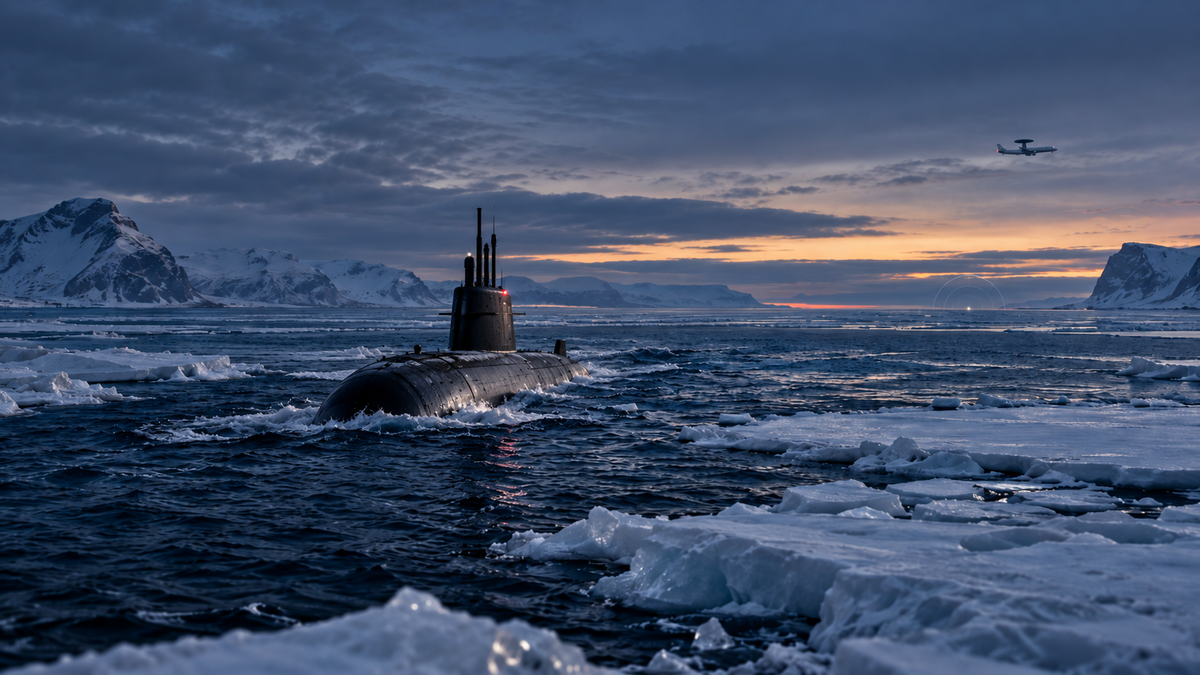
The Norway partnership is bringing a wider northern picture into focus: long-range surveillance, new submarines, icebreakers, Rangers and a growing network of Arctic allies.
When Canada selected Germany’s TKMS as the preferred supplier for its next submarine fleet in July, the obvious story was the submarines: up to 12 new boats, with the first four targeted for delivery in 2034 and South Korea’s Hanwha Ocean held in reserve if negotiations with TKMS fail to produce a final agreement.
That was a big enough story on its own. Then Norway came to Ottawa.
Prime Ministers Mark Carney and Jonas Gahr Støre said this week that Canada’s entry into the German-Norwegian Type 212CD submarine cooperation could become the foundation for something much larger. After the submarine negotiations conclude, the two governments intend to pursue an enhanced Defence Cooperation Agreement. Their joint statement also points toward deeper cooperation in Arctic surveillance, situational awareness, Coast Guard operations, space, research and defence technology.
Suddenly, the submarine looks less like an isolated purchase and more like one piece of an Arctic system Canada has been assembling in parts. Not one grand master plan: these programs come from different departments, have different timelines and range from capabilities already in service to projects still being negotiated. But they keep circling the same problem:
How does Canada actually see, reach and defend an enormous North — and stay there long enough for that presence to matter?
First, Canada has to see farther
Canada’s geography once offered a certain amount of protection simply because everything was so far away. That is becoming less reassuring. Long-range aircraft, missiles and other emerging threats make early warning more important, not less, while distance across Canada’s North remains enormous.
In May, Ottawa selected Saab as preferred supplier for a new Airborne Early Warning and Control capability. Saab is proposing its GlobalEye system, built on Bombardier’s Canadian-made Global 6500. The aircraft would give Canada long-range surveillance and command-and-control capability, including in the Arctic and other remote regions. Canada is negotiating; it has not yet committed to a purchase.
On the ground, another piece is further along. Canada and Australia moved the Arctic Over-the-Horizon Radar program into its delivery phase in June. The system is designed to detect threats approaching North America through northern and Arctic approaches at ranges conventional radar cannot provide, with initial capability targeted for December 2029.
Space is becoming part of the picture too. The Canada-Norway partnership includes deeper cooperation on satellite systems and other space-based capabilities supporting northern operations. Norwegian firm Kongsberg is also pursuing partnerships with Canadian companies including MDA Space and Telesat in areas such as maritime awareness, surveillance and connectivity.
GlobalEye, over-the-horizon radar and satellites are different technologies aimed at the same basic requirement:
Canada cannot defend what it cannot reliably see.
Then it has to reach it
This is where the submarines come back into the story. Canada wants a fleet capable of maintaining a sustained presence across the Atlantic, Pacific and Arctic. Moving from the current four Victoria-class submarines to as many as 12 new boats would give the Navy considerably more capacity to balance deployment, maintenance and training.
The Type 212CD choice matters for another reason. Canada would be entering a submarine cooperation already built around Germany and Norway rather than operating another uniquely Canadian class. That creates possibilities for closer training, sustainment, industrial cooperation and shared operational experience over the decades the fleet would remain in service. Norway is explicitly describing the submarine decision as an opportunity to deepen military, industrial and technological ties well beyond the boats themselves.
Above the ice, Canada is rebuilding another fleet. Two new polar icebreakers are now under construction, with one expected in 2030 and the other in 2032. The Coast Guard says the ships will allow Canada to operate at higher latitudes for longer periods while supporting northern communities, Arctic security, science and emergency response.
A submarine and an icebreaker have very different jobs, but both address the same Canadian problem:
Getting to the Arctic is not enough. Canada has to be able to stay there.
And Canada still needs people who know how to operate there
Technology extends reach, but it does not replace presence. Canada has approximately 5,500 Canadian Rangers maintaining a presence across 205 remote and isolated communities, including more than 1,500 in 66 northern communities and Inuit Nunangat.
That matters because Arctic operations are not southern operations with colder weather. Distance changes logistics, weather changes timelines, communications fail differently and equipment behaves differently. Local knowledge becomes a capability of its own.
Other Canadian Armed Forces units are also spending more time working in those conditions. This year’s Operation NANOOK-NUNALIVUT involved about 1,300 Canadian Armed Forces members, supported by nearly 200 vehicles and pieces of equipment. Military personnel from Belgium, Denmark, France and the United States participated as well, and the operation included a patrol of more than 5,000 kilometres from Inuvik to Churchill.
Exercises do not prove Canada has solved its Arctic defence problem. They do something more basic: they make the Arctic less theoretical to the people who may eventually have to operate there for real.
The network around Canada is getting wider
The Norway relationship matters partly because it is not happening alone. On Tuesday, Canada and Estonia convened the first ministerial meeting between Canada and the Nordic-Baltic Eight — Denmark, Estonia, Finland, Iceland, Latvia, Lithuania, Norway and Sweden.
The participants explicitly described the Baltic Sea, North Atlantic and Arctic as interconnected elements of allied security. They also identified defence industry, maritime security, critical-infrastructure protection and economic security as areas for deeper cooperation. That puts the Canada-Norway relationship into a wider northern context.
Canada has also formally applied to join the UK-led Joint Expeditionary Force, another step toward closer military interoperability with northern European allies.
Canada has also been deepening its presence closer to home. In February, Ottawa opened a Canadian consulate in Nuuk, Greenland, while Canadian and Greenlandic officials discussed closer cooperation in mining, clean energy, infrastructure, air and sea connectivity and economic security in the North.
That diplomatic move matters. Greenland sits beside Canada in an Arctic receiving far more strategic attention than it did even a few years ago. Showing up there permanently is a different kind of northern presence — but it is presence nonetheless.
None of this means Canada is moving away from the United States. NORAD remains central to continental defence. Canada’s new over-the-horizon radar is explicitly part of NORAD modernization, and American forces continue to train alongside Canadians in Arctic exercises.
What is changing is the number of other relationships being built around that foundation: Australia on radar; Germany and Norway on submarines; Norway on surveillance and space; northern Europe on Arctic security; Greenland on diplomacy and northern cooperation.
Canada’s Arctic network is getting denser.
The submarine was the clue
When Canada announced TKMS as preferred supplier in July, the obvious questions were about the boats: how many, how much, when they will arrive and how much work Canadian industry will receive. Those questions still matter.
But Norway has made another question harder to ignore:
What is Canada actually trying to become in the Arctic?
There is no seamless system yet. Some capabilities are operating now, others are under construction, and some remain negotiations and proposals. Canada also has enough experience with delayed defence projects to know that an announcement and an operational capability are not the same thing.
But the direction is becoming clearer. Canada is trying to see farther north, operate there longer, train there more often and work with more countries that understand what the geography demands.
The submarine decision is one part of that build.
The network forming around it may eventually matter just as much.
Editor’s note: This is the first in a Nasty Canuck look at Canada’s changing Arctic strategy. A follow-up will examine the roads, ports, power, communications and community infrastructure needed to sustain a larger Canadian presence in the North.