What Canada Can Build With Its Commonwealth Partners
Commonwealth cooperation can help a Canadian researcher or exporter get further. The route runs through working relationships, national laws and institutions able to keep them going.
Canadian expertise can travel further through shared research, education and trade initiatives. The work depends on institutions that give people the tools and support to carry it on.
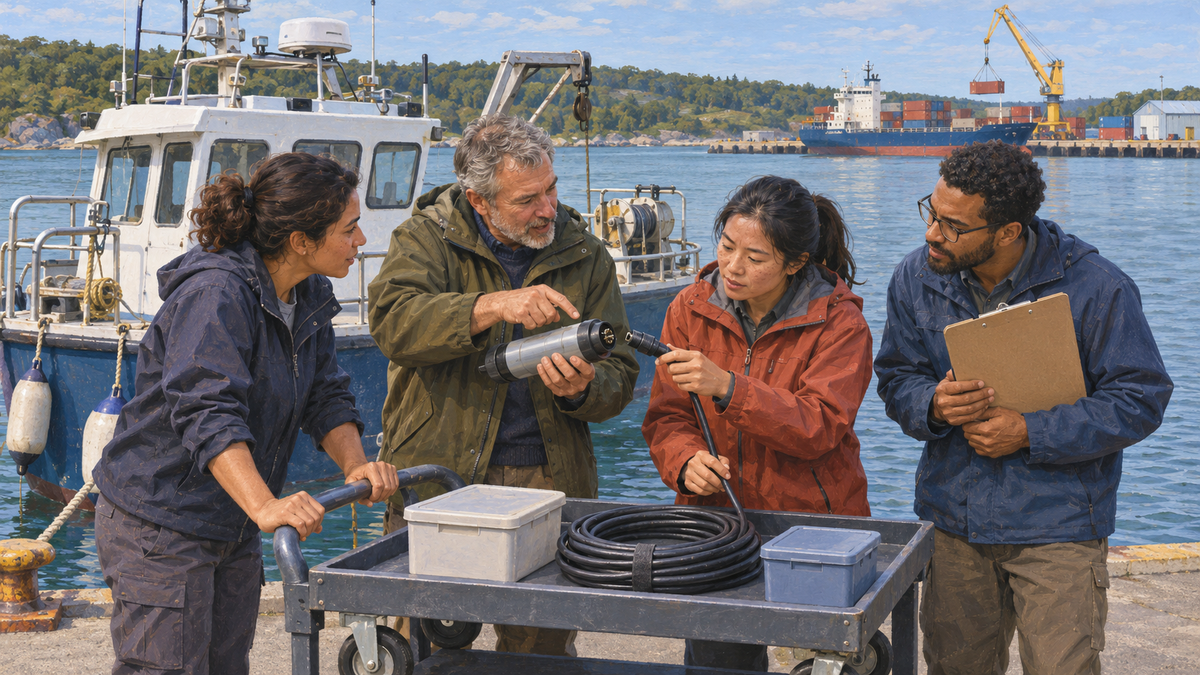
In September 2024, scientists from Africa, the Caribbean and the Indo-Pacific gathered on British Columbia’s Quadra Island to learn how to test coastal waters. Over five days, they worked with a portable kit that measures nutrients and other signs of water quality. The workshop, hosted by the Tula Foundation, was part of a Canadian-backed effort to make ocean monitoring more accessible.
The project, GEM-in-a-Box, brings Fisheries and Oceans Canada together with partners under the Commonwealth’s Blue Charter. It offers a tangible answer to a question that can get lost around a summit table: what can countries actually do together?
The previous instalment examined the Commonwealth’s reparations debate. Alongside those unresolved questions, Canada and its partners have working relationships in science, education and commerce. Some have already produced equipment, training and research. Others offer a way to tackle obstacles that individual businesses and institutions would struggle to remove themselves.
Science that can leave the laboratory
GEM stands for Global Eutrophication Monitoring. Excess nutrients can encourage harmful algal growth and leave waters short of oxygen. Measuring the problem requires equipment, reliable methods and people who know how to use both.
According to the Commonwealth Secretariat’s account of the project, Fisheries and Oceans Canada developed a prototype and tested its phosphate measurements against laboratory equipment at the Institute of Ocean Sciences. Field testing by the Tula Foundation helped refine the kit. The Secretariat also describes participants sharing their training in Cameroon and using the equipment at the University of The Bahamas.
That combination matters. A device developed in Canada can become more useful when researchers elsewhere help establish how it performs in their own waters. Shared methods also make it easier to compare what different teams find. The programme aims to build an open, comparable body of data on nutrient pollution.
Equipment is only part of the cost. The account of the December 2023–December 2025 pilot estimated a kit at roughly C$30,000, depending on prices and shipping, and described follow-up technical support and mentoring. Maintaining the instruments and managing the data require people who can carry on the work after the training visit ends.
Research exchanges with work to do
Canada’s Queen Elizabeth Scholars programme began with a Commonwealth focus and later widened its reach. Its first call for university projects in 2014 centred on Commonwealth partnerships; the advanced-scholars phase extended beyond the association in 2016. The Commonwealth connection helped provide a starting point for relationships that could grow further.
The programme works through projects proposed and run by Canadian universities, which recruit scholars for exchanges with their partners. That gives a university a way to connect a student’s placement to an existing field of research, rather than treating the trip as an educational benefit on its own.
McGill University’s LINkIN-Ghana project with the University of Ghana connected researchers with farmers, businesses and community organizations working on food and nutrition. Its design included placements outside universities and a requirement to share knowledge at the University of Ghana. Under that design, Canadian scholars would do their research and placements in Ghana.
McGill’s record of completed placements shows the kind of work involved. Scholars Priscilla Boadi and Faustina Twumwaa Gyimah reviewed evidence on food production, access and safety for Ghana’s dietary-guidelines work. They presented their findings to an evidence-validation workshop. The placement gave researchers practice working with the people responsible for turning evidence into public guidance.
The partnership also crosses language and institutional boundaries. McGill describes Netlinks, a later collaboration with the University of Ghana and Burkina Faso’s Université Joseph Ki-Zerbo, as connecting Canadian and West African researchers with community organizations and businesses. Its purpose includes strengthening the ability of West African partners to address their own priorities. That gives Canadian researchers experience working on questions their colleagues abroad have helped define.
Making learning reachable
University exchanges serve a particular group. The Commonwealth of Learning, which Canada hosts in the Vancouver area, also works with people whose route to education runs through local training, open schooling and community organizations.
Its Canadian-supported Empowering Women and Girls project covers Bangladesh, Malawi, Mozambique, Pakistan and Sri Lanka. In its project results reported to December 2024, Global Affairs Canada records vocational training for 47,934 women and girls in local languages, as well as 5,702 girls and boys returning to formal schooling. These are reported programme results, rather than a measure of the Commonwealth’s overall effect on education.
The practical barriers go beyond getting a lesson onto a screen. The same project profile describes safe learning centres, work with local women’s organizations and help accessing financial services. A course becomes more useful when someone can attend safely, understand the instruction and put the skill to work.
Trade needs rules that businesses can use
Commercial cooperation has its own version of that problem. A business may be able to find a customer abroad while still facing paperwork and legal requirements that make a sale cumbersome.
The Commonwealth’s Model Law on Digital Trade, published in September 2025, gives governments a framework for recognizing electronic communications, signatures and trade records. It is intended to help countries make their legal systems work together as more commerce moves away from paper.
The guide to enactment sets out model provisions for regulations and commencement, leaving governments to adapt the details and decide when legislation takes effect. Countries can use a common starting point while making the legal changes through their own institutions.
For a Canadian exporter shipping to a Commonwealth partner such as Australia, the Comprehensive and Progressive Agreement for Trans-Pacific Partnership (CPTPP) can provide preferential tariffs. The Trade Commissioner Service’s guide walks businesses through product classification, rules of origin and certification. Goods must qualify, and the importer must claim the preferential tariff treatment.
Commonwealth cooperation can help governments address shared administrative problems while businesses use the agreements available to them. Its contribution is most credible when it makes a particular part of a transaction easier, with enough legal and technical consistency for firms on both sides to rely on it.
Giving a partnership somewhere to go
One of Canada’s newer commitments brings research, skills and business development together. Ottawa’s November 3 Commonwealth package includes C$3 million over three years for an International Trade Centre project on sargassum, the seaweed that accumulates along Caribbean coastlines. The project is intended to help businesses develop products such as fertilizers and building materials, while building technology and investment links with Canada.
There is a plausible Canadian role in helping turn an environmental problem into something useful. The project will still have to establish which products work and can find buyers. Caribbean businesses bring knowledge of the material and the places affected by it; Canadian partners can contribute expertise and commercial connections. Each needs a reason to keep working with the other.
Across these initiatives, the opportunity for Canada lies in putting capable institutions into lasting contact with capable partners. The equipment, placements and legal tools give them something specific to work on. A partnership becomes more valuable when the people who did the first project are still there to answer the phone for the second.
Editor’s note: This is the fourth instalment of Canada and the Commonwealth: Past, Purpose and Possibility. The preceding article is Where Canada Fits in the Commonwealth’s Reparations Debate. The fifth and final instalment will consider where Canada should focus its Commonwealth efforts, what it should help build next and how Canadians can judge the results.