What Canada Got in Its China Trade Deal, and What’s Still on the Table
For Canadian canola processors, China bought about eleven times as much meal as Thailand, Vietnam and Indonesia combined in the first nine months of 2026. What could Carney’s trade talks change?
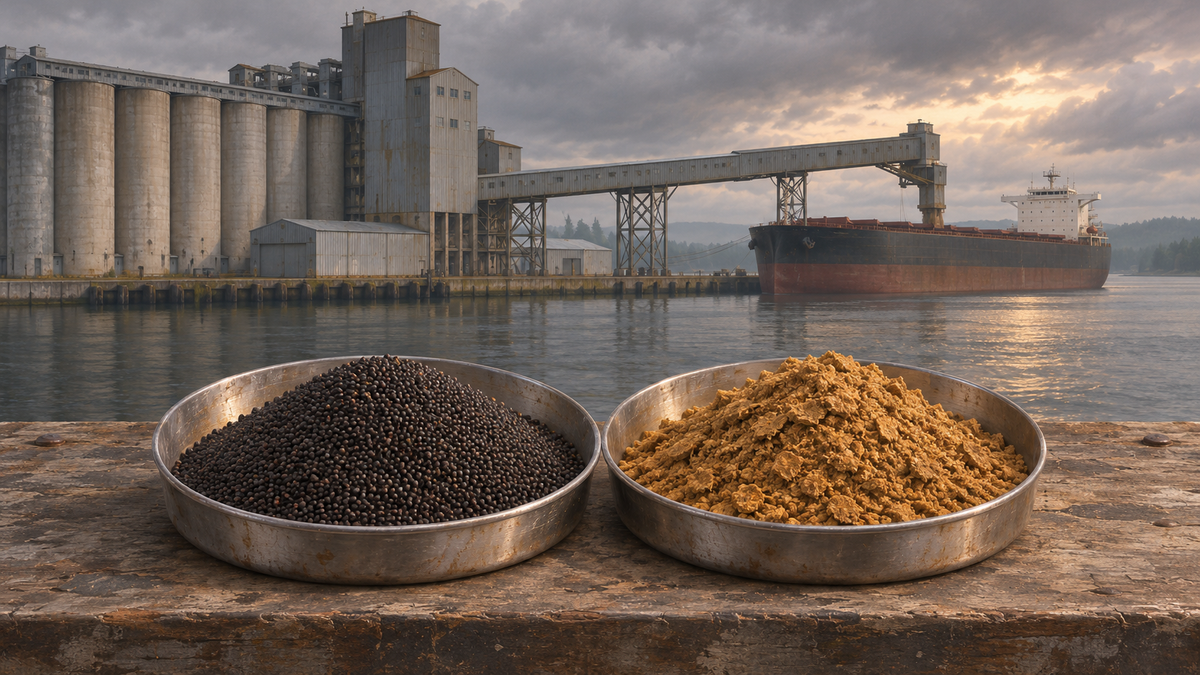
Two more years of tariff relief give Canadian exporters more time to sell into China. Canadian canola seed still faces a tariff as Mark Carney prepares to meet Xi Jinping in Shenzhen next week.
Just after the canola harvest, Canadian Canola Growers Association chair Andre Harpe said farmers were deciding how to sell this year’s crop and making plans for 2027. He welcomed the extension for canola meal. A processor shipping meal and an exporter shipping seed face different costs at the Chinese border.
Canola meal and seed face different tariffs
On November 4, Trade Minister Maninder Sidhu announced that China would extend relief on Canadian canola meal, peas, lobster and crab through the end of 2028. The suspension was due to expire at the end of 2026.
Canola meal is what remains after the oil is extracted. It’s used in animal feed and now enters China tariff-free. Whole Canadian canola seed still faces a combined tariff of 14.9 per cent. China brought the rate down from almost 85 per cent in March under the January arrangement. It now consists of a 9 per cent regular tariff and a 5.9 per cent anti-dumping duty. The November extension leaves both in place. The relief on meal gives Canadian crushers a market for what they produce alongside the oil. A further cut on seed would help exporters selling to crushers in China.
The Canadian concessions on metals and EVs
Ottawa agreed to extend surtax relief through 2028 for certain Chinese steel and aluminum products it says are unavailable from Canadian producers. The January amendment to Canada’s remission order shows how narrow the exceptions can be. One entry covers stainless steel wire with a triangular cross-section and specifies the grades and dimensions that qualify.
The published remission order we reviewed still lists December 31, 2026 as the cutoff for its general product schedule. The details importers need for 2027 and 2028 are the eligible products, any importer-specific conditions and the dates the relief applies.
Canada’s electric-vehicle concession came earlier. Ottawa repealed its 100 per cent surtax on Chinese EVs on March 1 and opened an initial quota of 49,000 vehicles at a 6.1 per cent tariff. Eligible vehicles require shipment-specific import permits. The vehicle quota was part of the January bargain that reopened agricultural markets. The November announcement addressed the farm, seafood and metals measures.
What to watch in Manila and Shenzhen
Carney’s agenda in Manila includes separate trade talks with the Association of Southeast Asian Nations and the Philippines. From January through September 2026, Canada shipped about 1.45 million tonnes of canola meal to China and 3.41 million to the United States. Thailand, Vietnam and Indonesia bought about 131,000 tonnes combined, according to the Canola Council’s table based on Statistics Canada trade data. The three Southeast Asian markets together took about one tonne for every eleven that went to China. Growth there could give processors more buyers and take some of the risk out of depending on any one market.
Carney says he’ll meet Xi Jinping at the Asia-Pacific Economic Cooperation summit in Shenzhen and raise foreign interference. The test in Shenzhen is whether any new terms lower the cost of selling whole seed. For any agreement announced in Manila, look for which products get better access, where and when. Those are the details a Canadian exporter can use to price the next shipment.