Arctic Sovereignty Needs Roads, Ports, Power — and Plumbing
Canada’s northern projects promise stronger defence and better access for residents. Delivering both means testing the routes, costs, community consent and operating plans behind the announcements.
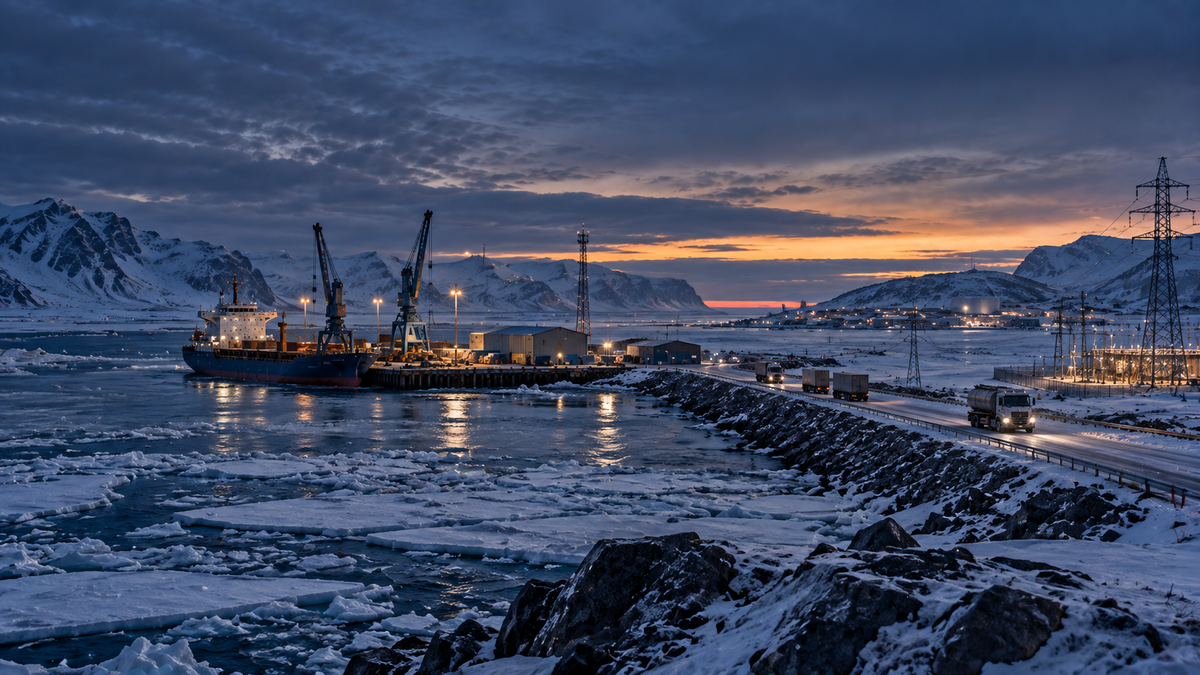
Canada can buy submarines, radar and icebreakers. Keeping a larger Canadian presence in the North depends on something less dramatic: transportation, electricity, communications and communities that work year-round. That is where the ambition meets the cost of staying.
In the first article in this series, we looked at the military side of Canada’s Arctic build. The next layer is the infrastructure those capabilities depend on. A submarine can patrol and an aircraft can reach the North, but neither can replace a road, keep a town’s lights on or make its water system work.
Several of the projects below remain proposals, with routes, approvals, financing or commercial arrangements still being worked out.
Connect the North
The proposed Grays Bay Road and Port project would connect a deepwater port on Nunavut’s Arctic coast to Jericho Station, at the former Jericho mine site, with roughly 230 kilometres of all-season road. It also includes an airstrip and facilities for fuel, cargo and community resupply. West Kitikmeot Resources Corporation is advancing the project; the Kitikmeot Inuit Association retains equity in the company, alongside private investment.
Ottawa describes potential civilian-military uses for the port and airfield, subject to further assessment by National Defence. Its larger transportation ambition depends on a second project: the proposed Arctic Economic and Security Corridor, a roughly 400-kilometre road through the Slave Geological Province toward the Nunavut border. Together, the projects are intended to create the first all-season road connection between Nunavut and the national highway system, opening an Arctic export route for critical minerals.
WKR shortlisted major-works contractors in September and says it intends to select a preferred proponent in March 2027. The Nunavut Impact Review Board still lists Grays Bay under active review.
Farther west, the proposed Mackenzie Valley Highway would extend roughly 800 kilometres from Wrigley to the Dempster Highway south of Inuvik. It would give communities along the route an alternative to aircraft, river barges and winter roads. Federal project material estimates that the completed connection could shorten the road journey between Yellowknife and Inuvik by about 1,200 kilometres.
On Sept. 8, Ottawa announced $405 million through the Arctic Infrastructure Fund. The package covers assessment and design work between Wrigley and Norman Wells, the Great Bear River Bridge, an access-road extension and preliminary work on two other bridges. It is funding to advance the route, rather than a commitment that the full highway is financed and ready to build.
The expanded route remains under review. The Mackenzie Valley Review Board scheduled an October 1 technical session on how extending the proposal toward Inuvik should change the assessment. That work includes wildlife, harvesting, permafrost, water crossings and community effects. The highway could improve access between defence facilities, but its daily value would come from moving food, building materials, fuel and people more reliably.
Power the North
Roads and ports need electricity, as do the communities and facilities around them. The proposed Taltson Hydro Expansion would add 60 megawatts of generating capacity and roughly 320 kilometres of transmission, connecting the North and South Slave electrical grids for the first time.
The Northwest Territories government is developing it with Indigenous partners. Its current project record says commercial arrangements, ownership and the project footprint are still being defined; an environmental assessment application is among the next steps. Connecting to the rest of Canada would require a further phase.
Federal planners also intend to explore supplying the expanded NORAD Forward Operating Location in Yellowknife with Taltson power. Airfields, communications equipment, maintenance shops and accommodation all need dependable electricity; so do the people who already live nearby.
Build the support system
National Defence is planning more of its own logistical backbone. The Northern Operational Support Hubs program is a $2.67-billion investment over 2024–2044, intended to help the Canadian Armed Forces deploy faster, stay longer and operate year-round across the North.
The planned network has confirmed hub locations in Inuvik, Iqaluit, Resolute, Whitehorse and Yellowknife, with smaller support nodes at Cambridge Bay and Rankin Inlet. Storage, maintenance, medical support and places to receive and move personnel are part of the capability.
Canada has also announced $32 billion for northern NORAD basing infrastructure, including Inuvik, Yellowknife, Iqaluit and Goose Bay. The work covers airfields, hangars, fuel and ammunition facilities, accommodation and other support buildings. The same federal plan includes $294 million for Arctic airport upgrades, including Rankin Inlet and Inuvik, to support larger aircraft and better civilian and military access. These are long-term investments in the places that keep aircraft operating after they arrive.
Then there is the plumbing
National ambition eventually runs into municipal capacity. In April, Ottawa announced more than $108 million for Iqaluit’s water and wastewater infrastructure, including trucked services and improvements to the utilidor, the network carrying water and sewage through the city. The government expects the upgrades to enable roughly 2,000 to 2,500 additional homes by 2031.
A smaller announcement on October 1 makes the same point. Canada, Newfoundland and Labrador and the Nain Inuit Community Government announced a joint investment of more than $3.9 million in Nain’s sewer system. The work will replace damaged mains and manholes and improve drainage, with the aim of reducing sewer backups, protecting nearby marine ecosystems and allowing future housing growth.
These are community projects with reasons to exist regardless of defence policy. Residents need reliable services now. A larger northern presence would also bring demands from military personnel, Coast Guard crews, construction workers, researchers and businesses. Adding people requires homes, and homes require water, sewage, heat and electricity.
Communications belong in that foundation too. In April, Ottawa announced more than $86 million for a Northwestel project intended to reach all 25 Nunavut communities with unlimited high-speed Internet. The plan calls for Northwestel to obtain capacity from Telesat’s Lightspeed low-Earth-orbit satellite constellation. Telesat’s August update puts the start of global Lightspeed service in the first quarter of 2028.
Reliable communications would help households and businesses while supporting the environment in which emergency services and government agencies operate. Northern development and security overlap, but communities should not have to dress every essential service in a defence uniform to make it worth funding.
Nanisivik is the warning
Canada has already learned how far an Arctic facility can fall short of its original purpose. In May, National Defence announced that Nanisivik would be transitioned out of operational use. The naval refuelling site had faced construction delays, reduced scope, a short seasonal access window and costly jetty repairs.
DND’s explanation also included changing operational needs: the Harry DeWolf-class patrol ships have enough range to make the site less valuable than originally envisaged. At the announcement, the department reported $110.2 million invested and estimated that another $200 million would have been required to make the facility fully operational.
That is a warning about usefulness as well as execution. A port needs ships that can use it, enough operating time to justify it, and a maintenance plan that survives the conditions. Changing requirements can undermine the case even after money has been spent.
In the Arctic, “built” and “useful” are not the same thing.
Dual use only works if both sides benefit
There is a sound argument for infrastructure that serves civilian needs every day and can support national security when required. A runway carrying residents and medical flights has a purpose outside a military exercise. A dependable power supply can serve homes and businesses as well as a defence facility. Shared use can strengthen the case for investment.
It does not make every proposed project a good one. Resource traffic depends on mines that may still need financing and approvals. Roads and power lines affect land, wildlife and harvesting. Construction money has to be followed by operating capacity, maintenance funding and a clear account of who pays when costs rise.
Northern governments and communities are already helping shape these proposals. The Arctic Economic and Security Corridor is being advanced by the Tłı̨chǫ Government and Yellowknives Dene First Nation with the Northwest Territories government. The Kitikmeot Inuit Association maintains equity in WKR. Along the Mackenzie Valley Highway, Sahtu Secretariat Incorporated, the Gwich’in Tribal Council and Pehdzéh Kı̨ First Nation have established a coordinated framework for involvement in governance, planning and co-design.
Those relationships do not settle every question. In Cabin Radio’s coverage of the highway funding announcement, Dehcho Grand Chief Herb Norwegian cautioned that First Nations consent and the capacity of communities to handle the coming demands still needed attention. National urgency should make governments better at resolving those questions, not tempt them to pretend the questions have disappeared.
The practical test is whether a project strengthens everyday northern life and gives Canada a capability it can afford to sustain. Benefits promised for a distant security crisis will not repair a failing community system today.
Sovereignty has to be sustained
The dramatic hardware will keep attracting attention. Submarines, aircraft, radar and icebreakers matter, and the first article examined that part of the build. This layer is about making a larger presence workable: getting supplies to the right place, keeping facilities powered and giving communities room to grow.
The next milestones should be concrete: approved routes, financing for construction and maintenance, and services residents can use. Defence facilities also need operating budgets and a clear account of who pays. Those are the tests that will tell us whether the northern build is becoming useful.
Canada can fly sovereignty into the North for an exercise. Sustaining it every day means building systems that work for the people who stay when the exercise is over.
Editor’s note: This is the second article in Nasty Canuck’s Building Arctic Canada series. Read the first, “Canada’s Submarine Decision Is Part of a Much Bigger Arctic Defence Build”.