Ottawa Vows Enforcement After Stellantis Signs Brampton Sale
Brampton’s proposed buyer has manufacturing ambitions. The unresolved questions concern who returns to work, on what terms, and what Ottawa can recover.
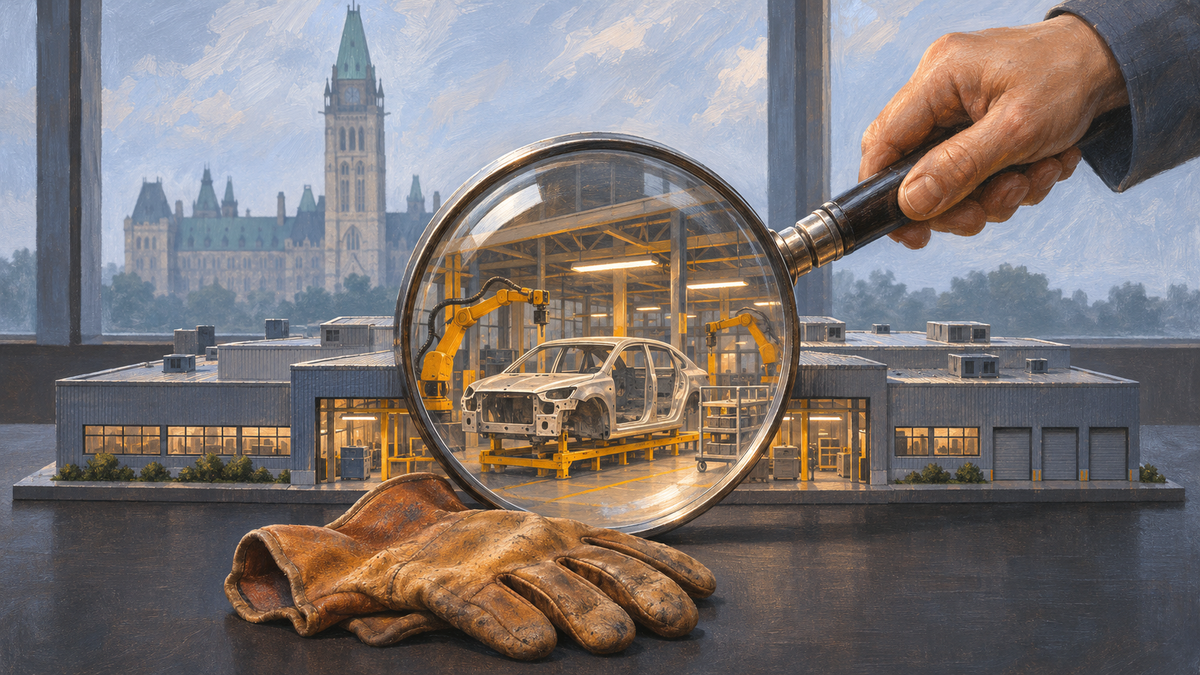
Workers waiting to return after retooling face a proposed change of owner, uncertain employment terms and a federal dispute over the support provided to Stellantis.
Prime Minister Mark Carney pledged on November 10 to use legal and policy measures to protect Brampton workers and public funds after Stellantis agreed to sell its idled assembly plant to Canadian defence manufacturer Roshel. Dow Jones reported that Carney called the agreement unacceptable and said it violated Stellantis’s commitments. Stellantis told Global News it had offered to return support for Brampton’s original retooling.
The November 9 asset purchase agreement covers the Brampton plant and its equipment, for an undisclosed price. The companies expect closing by the end of 2026, subject to conditions including government and regulatory requirements. Signing the agreement is a significant step, but the transfer remains conditional.
Brampton workers had expected a different return to production. The plant stopped making vehicles in 2023 and was slated for retooling to build the Jeep Compass. Stellantis paused that work in early 2025 and later shifted the planned Compass production to Illinois. When bargaining opened on September 1, Unifor identified approximately 2,200 Brampton members on indefinite layoff. Their expected return to a Stellantis production line has become a negotiation over a different future.
Ottawa’s dispute began before the sale
The federal response has already moved beyond an initial warning. In her December 4, 2025 testimony to the Commons international trade committee, Industry Minister Mélanie Joly said she had triggered the contractual dispute-resolution process on November 3 and was serving Stellantis with a notice of default on December 4. Ottawa was pursuing its contractual remedies long before this week’s sale announcement; that chronology does not establish that a court has ruled on the dispute.
The money also needs a precise description. In the funding-disbursement section of its December 9, 2025 committee briefing, ISED recorded $222.4 million paid under a $529-million federal contribution agreement for Brampton and Windsor, as of March 31, 2025. The department said further payments under that agreement were on hold following the Compass announcement. The figures cover the two facilities together and describe an earlier accounting position; they are not a current Brampton-only total or an amount a court has ordered repaid.
A repayment agreement would address the public contribution. It would not, by itself, establish which employees return to work, their employment terms or what production remains in Brampton. Those outcomes require their own commitments. The reporting reviewed for this article does not establish that a new lawsuit has been filed or that a repayment has been completed.
Future hiring leaves existing workers’ terms unsettled
Roshel CEO Roman Shimonov told Reuters on November 10 that the company would give Stellantis workers priority in future hiring. He said Roshel did not intend to take on Stellantis’s previous commitments. He also said the company was talking to several automakers about making civilian vehicles at the plant.
Stellantis’s own sale announcement acknowledges employee obligations under the collective agreement and applicable laws, and says it is prepared to negotiate a settlement with Unifor.
Unifor alleges that closing and selling Brampton breaches both the collective agreement and commitments to the federal government. The union also warns about the consequences for automotive suppliers.
Roshel’s statement about what it intends to assume is likewise a company position. It does not provide an independent determination of which legal obligations apply to the transaction. Workers still need to know what Stellantis will settle with them and what Roshel will commit to anyone it hires, including pay, benefits, seniority and pension arrangements.
Alliston and Oakville are following different paths
The Brampton decision comes as other Canadian plants receive production investment. Honda announced $166 million in capital upgrades at Alliston within a broader $867-million commitment, supporting next-generation hybrid and gasoline vehicles and the reintroduction of engine manufacturing. Honda says the investment will maintain its workforce of more than 4,000; that is a retention commitment, not 4,000 newly created jobs.
Ford’s federal project record describes Super Duty pickup production and a new stamping facility at Oakville. The disclosure ties public support to a specified vehicle programme and production equipment.
These projects do not establish that the same products or commercial choices were available to Stellantis. They show why Canada’s auto sector needs to be assessed plant by plant. Our earlier examination of the Canada–Ontario industrial plan identified Brampton production commitments as a concrete measure of what public auto support would secure. The sale agreement makes that question more immediate.
Carney said stakeholders would meet on November 12. The next agreements need to identify the amount and timing of any public repayment, the terms of Stellantis’s settlement with employees, and the employment Roshel is prepared to commit to. Those details would let workers and taxpayers assess what the proposed transaction actually delivers.