How Canada Grows, and Where Immigration Fits
Canada’s population grew by 0.5 per cent in the year to July 2026. The federal immigration plan counts something different. Here’s how the two fit together.
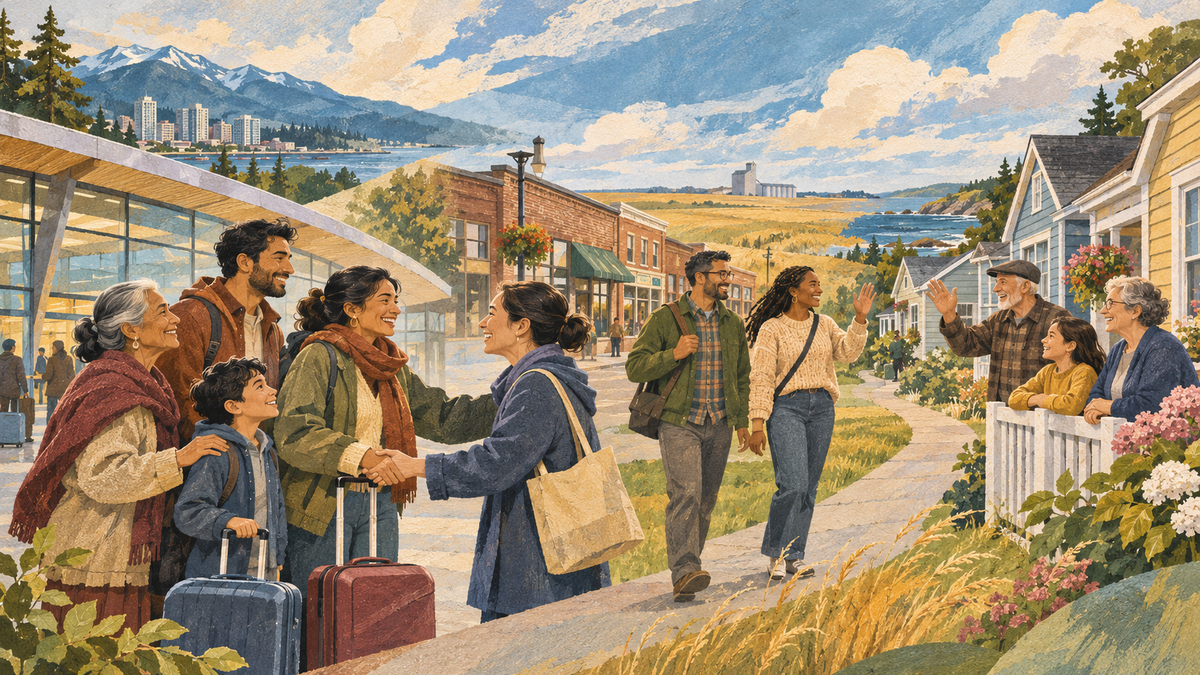
Ottawa is keeping its main immigration targets for 2027 while raising the provincial nominee target. A separate one-year measure makes room for more people already living in Canada to become permanent residents.
Consider a worker in Moncton who becomes a permanent resident. They can make plans that were harder to make on a temporary permit. Ottawa counts one more permanent-resident admission. Moncton still has the same resident.
What Ottawa actually changed
For 2027, Ottawa kept the previous plan’s two main targets. The 2027–2029 Immigration Levels Plan calls for 380,000 permanent-resident admissions and 370,000 new arrivals through specified temporary worker and student programs. The second figure leaves out visitors, asylum claimants, permit extensions and applications for study or work permits made from within Canada. The plan repeats those headline targets for 2028 and 2029, subject to confirmation or adjustment. Within the permanent total, the Provincial Nominee Program target rises to 95,000 for 2027, up from 92,500 for the same year in the previous plan.
The federal plan also sits alongside a separate, one-year measure for 2027. Immigration, Refugees and Citizenship Canada plans up to 100,000 spaces for eligible workers and their families already living outside Quebec. It plans up to another 100,000 for specified groups already in Canada, including people waiting under certain family and humanitarian pathways. Both ceilings sit outside the regular targets. The final number of admissions will depend on the outcome of those applications.
Where the growth came from
There are two ways Canada’s population changes. One is natural increase, the difference between births and deaths. The other is net international migration, which accounts for permanent immigration, changes in the number of non-permanent residents, and people leaving Canada or returning. Moving from Ontario to Alberta changes both provinces’ populations while leaving Canada’s total alone. Statistics Canada’s demographic estimates explain how those changes are counted.
In the 12 months to July 1, 2026, Statistics Canada estimated that Canada added 189,425 people, or 0.5 per cent. Over that same year, estimated births exceeded deaths by 37,644. Net international migration accounted for roughly four-fifths of the growth, even as the estimated number of non-permanent residents fell by 154,614. The estimates are subject to revision.
Fertility helps explain the longer trend. In 2025, the total fertility rate was 1.26 children per woman, a measure based on that year’s birth rates by age. Births can still outnumber deaths at that rate because the number of people at each age matters. Over time, smaller generations reach working age while larger ones move into retirement.
Why immigration matters to an older Canada
By July 2026, one in five people in Canada was 65 or older. Statistics Canada’s labour-force scenarios show that immigration can make a substantial difference to the number of people available to work. They also show that participation matters, including whether older workers who want to stay in the workforce can do so. These are different ways of meeting a need that will vary by occupation and community.
Health care gives that distinction some weight. Internationally educated professionals already work across Canada’s health system, including in hospitals, community care and long-term care. The benefit of recruiting a nurse depends on whether there is a workable route to registration and a job where those skills can be used. For a patient waiting for care, that is where immigration policy and provincial workforce planning meet.
What communities have to plan for
Where people settle can matter as much as the national total. In a city with few apartments available, faster growth can raise competition for rentals. The Bank of Canada’s analysis of asking rents found that recent population growth added to demand and that local barriers limited how quickly supply could respond. In its fall 2026 report, Canada Mortgage and Housing Corporation estimated that restoring pre-pandemic affordability by 2036 would take roughly 417,000 to 469,000 housing starts a year. That is a modelled benchmark for restoring affordability, and the local shortfall varies.
A province nominating workers for a region should be able to say which jobs it expects them to fill and whether the people hired can find housing nearby. A school board needs to know where enrolment is growing so it can plan classrooms. Those are decisions governments and local institutions can make. How well they make them affects people arriving now and people already waiting for a rental, a school place or a family doctor.
A country made in many places
In the 2021 Census, nearly one in four people living in private households had been admitted as a permanent resident at some point, including people who had since become Canadian citizens. In 1971, most recent immigrants counted by the census had been born in Europe. By 2021, most had been born in Asia, including the Middle East. Among immigrants counted in 2021 who had been admitted in the previous five years, 36.6 per cent had first come to Canada on a work or study permit or as asylum claimants.
People reported more than 450 ethnic or cultural origins in 2021, sometimes naming more than one. That is one way to see Canada’s mosaic. First Nations, Inuit and Métis peoples have distinct histories and rights recognized in Canada’s Constitution. Immigration has its own place in the country’s history, and that story continues in the families and communities people build here.
The outcome will be easier to see in a place like Moncton. Can the worker stay and use their skills? Can the city plan homes and services for the people already there and those it expects to welcome? Both questions belong in the same conversation about how Canada grows.