Oakville Is Building Trucks Again. Canadian Buyers Can Help.
A truck’s plant code can tell a buyer more than the badge. Oakville’s restart brings that check into a new Canadian manufacturing story.
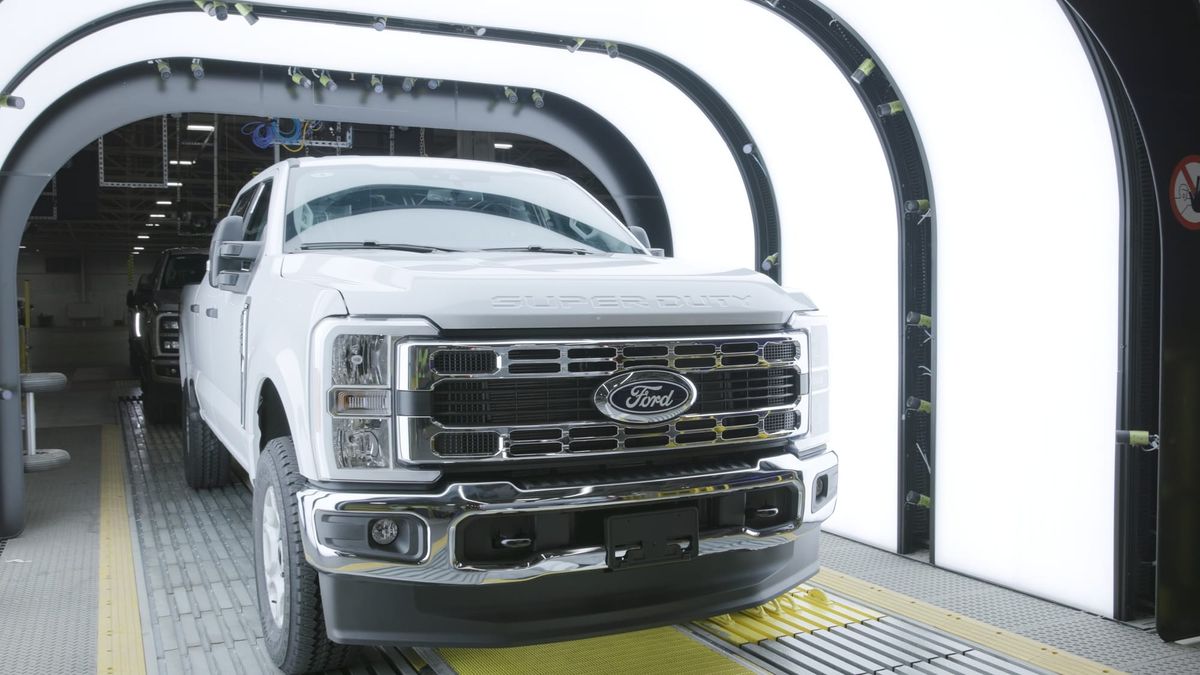
Canadian assembly, engine work and a new stamping plant give buyers concrete reasons to consider an Oakville-built Super Duty.
Ford’s Oakville Assembly Complex is shipping Canadian-built Super Duty trucks to dealerships. For buyers who need a heavy-duty pickup, that puts an Ontario assembly plant into a decision often made on towing capacity, price and brand loyalty. Where the truck was built deserves a place in that calculation, too.
The November 20 relaunch marks a return that workers waited more than two years to see. Unifor says the plant was idled in May 2024 for an electric-vehicle conversion before Ford changed the production plan to Super Duty trucks. Local 707 members have returned to the line; the union also credits Local 200 members in Windsor and Essex for the engine work supporting the programme.
More of the work happens here
Oakville’s transformation goes beyond changing the vehicle on the assembly line. Ontario says the nearly $5-billion investment includes a new stamping facility, allowing aluminum to be formed into vehicle parts domestically. The province reports more than 2,000 workers returning to the Oakville production floor.
That combination matters. Assembly provides the final production stage, while stamping adds another manufacturing operation in Canada. The Canadian contribution reaches further through Ford’s Windsor-built 7.3-litre V8 engines. Ford says Oakville joins its Kentucky and Ohio plants in producing Super Duty trucks, within an integrated North American network.
Ford remains owned by its American parent company. Canadian ownership and Canadian manufacturing answer different questions. Buyers can support work performed here while recognizing where corporate control sits.
Ask for the Oakville truck
The practical question at the dealership is specific: can you supply an Oakville-assembled Super Duty in the configuration I need?
Ask for the exact vehicle identification number, or VIN, and written confirmation of the assembly plant before committing. Ford’s 2027 F-250 and F-350 VIN guide identifies Oakville with “B” in the eleventh position; it also lists the Kentucky and Ohio plants. That code applies to the specified Ford models and model year. The same badge can therefore lead back to different factories.
The U.S. vehicle-safety agency’s VIN decoder displays plant and country information. If the result is incomplete or conflicts with the dealer’s records, get the discrepancy resolved before paying a deposit. Confirm availability and delivery timing for the actual truck being offered.
Keep the description precise. The Competition Bureau recognizes narrower origin descriptions such as “Assembled in Canada”. Final assembly here does not establish that every component is Canadian, and the sources reviewed for this article do not provide a verified Canadian-content percentage for an Oakville Super Duty.
Our earlier Canadian vehicle-buying guide covers the wider shopping list. Oakville now gives truck buyers a production milestone to follow through to the dealership.
Public support deserves a clear account
Governments helped finance this production mandate. Ontario’s announcement identifies commitments of up to $464.5 million from Ottawa and $464 million from the province, a combined ceiling of $928.5 million. These are announced contributions, not a verified total already paid.
Canadians should be able to follow the payment milestones, employment and production obligations, and repayment provisions attached to that support. The announcements reviewed here do not provide the full agreements needed to assess those terms. Production is a welcome result; judging the public investment over time also requires knowing what Ford committed to deliver and for how long.
Put Canadian assembly into the decision
A heavy-duty pickup still has to suit the job and the budget. Compare the exact towing and payload requirements, purchase and financing costs, fuel use, warranty and delivery date. Canadian assembly is a reason to consider a vehicle seriously; it should never pressure someone into buying a truck they do not need or cannot afford.
For a buyer already in the market, though, Oakville offers a concrete way to put a Canadian preference into the purchase. Ask for the Canadian-assembled vehicle, verify it, and tell the dealer why its origin matters. A manufacturer deciding where to assign future work should hear that customers value the work done here.
Canadians who need what Oakville builds can give its workers something useful: a place on the shortlist, and a fair chance to win the order.