Food Security Needs a Route to Market. Here’s Who Can Build One.
Ottawa’s $1-billion Food-Link Fund begins accepting expressions of interest October 14. Two programs target wholesale terminals and regional hubs, but applicants need to understand the financing - and Canadians still need proof of results.
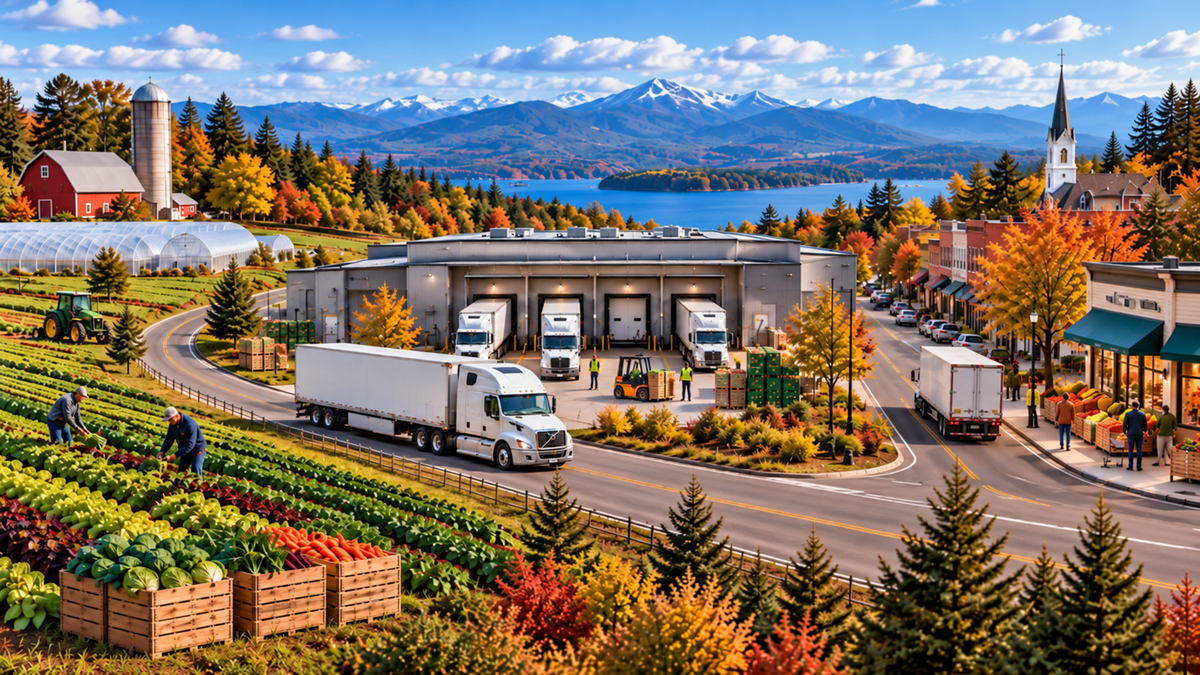
Growing the food is only part of the job. Someone has to store it, sort it, keep it cold, put it on a truck and find a buyer. For smaller producers and independent grocers, that trip can be harder than it sounds.
The federal government announced the Food-Link Fund on October 5. It sets aside $1 billion over 10 years for the stretch of the food system between producers and buyers, as part of Ottawa’s larger $3.2-billion National Food Security Strategy. The first expression-of-interest window is scheduled for October 14 to December 11, 2026.
There is a genuine problem to tackle. In its September 2026 grocery-competition review, the Competition Bureau said most Canadians still shop with five major grocery companies. Its 2023 market study found that some independent grocers must buy wholesale supplies from the same large chains they compete against. Access to the supply network matters before anyone gets to argue about shelf prices.
Two programs, two sizes of project
The Food Terminal Fund is the big-infrastructure arm, supporting a select number of large wholesale facilities where producers, distributors and retailers can move food at scale. A published funding listing confirms $568 million for the terminal stream overall—not a promised amount for any one applicant.
The Food Hub Program, run by Agriculture and Agri-Food Canada, works at the regional level. It can support buildings, cold storage, equipment, packaging, transport and digital systems that help local producers reach markets. AAFC may contribute up to $25 million per organization over the program’s life. That is a ceiling, not an automatic award.
Who can put a project forward?
For the Food Hub Program, AAFC’s eligibility rules include Canadian-incorporated for-profit businesses, co-operatives, not-for-profit organizations and eligible Indigenous organizations. Some provincial, territorial and municipal bodies may qualify where they have a commercial operating model or private-sector partners. The guidance specifically cites processors, distributors, logistics firms, independent grocers and regional food hubs as examples.
A producer with an idea is not automatically an eligible applicant. The applicant needs the right legal structure and a credible project tied to collecting, processing, storing or distributing locally grown or processed food. Financial institutions, academic institutions and foreign organizations are among those excluded from this stream. The Food-Link intake page routes terminal proposals to a different federal program; its terms should not be confused with the hub checklist. Buying food itself is not an eligible Food Hub activity.
The applicant has to bring money too
This is where the large headline number needs a smaller-print explanation. Under the Food Hub financing rules, AAFC normally covers no more than 50% of eligible costs; applicants provide at least the other half. Certain organizations majority-owned or led by specified underrepresented groups may qualify for a federal share of up to 60%.
A contribution is not necessarily a grant that never has to be paid back. Support with broad public benefits may be non-repayable. A contribution to a for-profit business mainly intended to generate profit or increase its value may be repayable, with terms set by agreement.
The timing matters. In the initial expression of interest, applicants can identify whether other financing is confirmed or still pending. But if invited to submit a full Food Hub application, AAFC says their financial contributions must be secured, with supporting documents and a credible plan to keep operating. The eligibility guidance also warns that costs incurred after an application is deemed complete but before both sides sign a contribution agreement are at the applicant’s risk.
How the application door works
There is one initial expression-of-interest process. Proposals suited to wholesale terminals are directed to Housing, Infrastructure and Communities Canada; regional hub proposals remain with Agriculture and Agri-Food Canada. Applicants who clear that first stage may then be invited to submit a more detailed application. An expression of interest is not an approval or a funding agreement.
The posted intake dates are October 14 to December 11, 2026, with the stated deadline of 11:59 p.m. Pacific Time. Applicants should check the official Food-Link page before submitting.
A better food route is not automatically a cheaper grocery bill
Ottawa wants improved distribution to create more competition and eventually lower food costs. That is plausible, but it is a policy objective—not a demonstrated result of this program. An extra refrigerated warehouse does not guarantee lower prices if a retailer cannot use it economically, producers cannot afford access or any resulting savings never reach shoppers.
The useful scoreboard starts with completed facilities, added capacity and actual usage by producers and independent retailers. Then come harder questions: did food reach more markets, were costs or losses reduced, and did competing buyers and sellers gain options they did not have before? Those are tests Nasty Canuck would apply, not reported results or official program performance figures.
Canada has no shortage of reasons to care about food security. The first test of Food-Link is whether credible organizations can put projects together and get them built. The test that follows is more practical: whether more Canadian food can find a buyer without having to travel through the same few doors.