Alberta Wanted Two Rural Seats Back. Why Split Lethbridge?
The plan endorsed by Alberta MLAs would give Lethbridge one city-only riding. A competing map would preserve two predominantly urban seats.
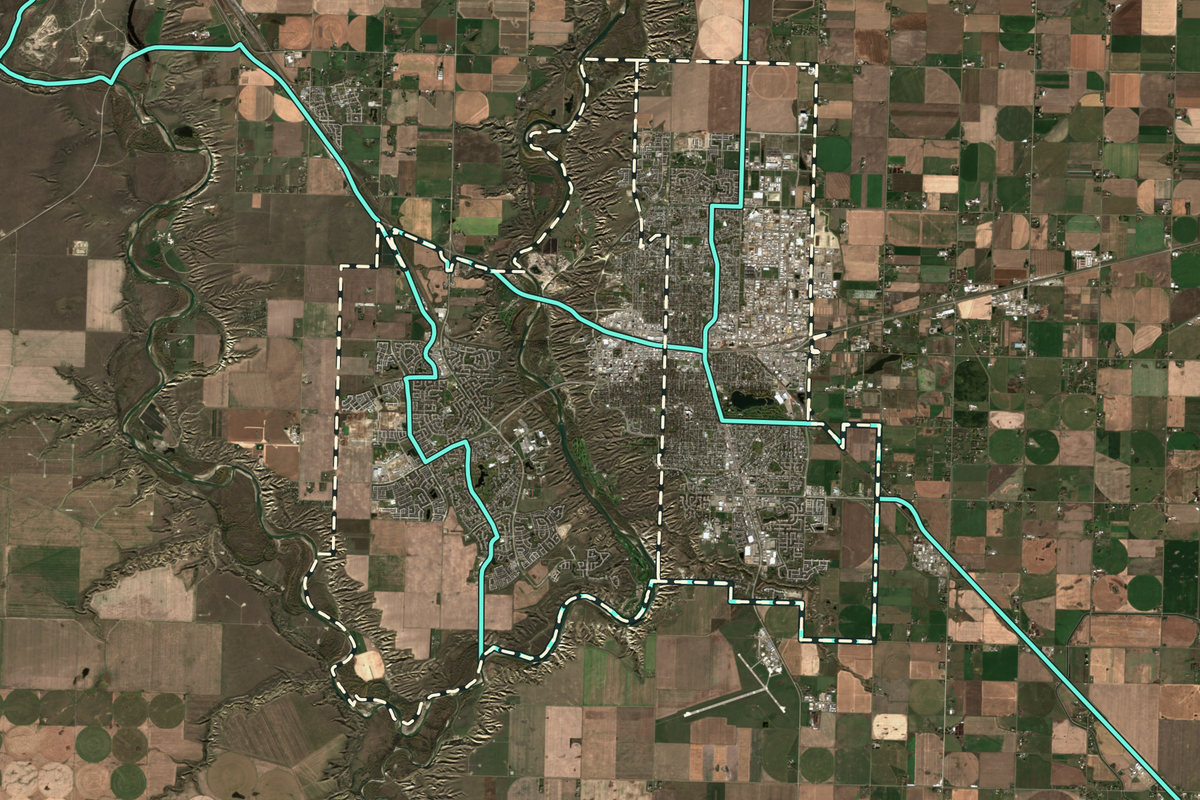
Alberta’s legislature backed a map that would put Lethbridge neighbourhoods in four ridings. A second plan would restore seats in the same two rural areas while keeping two predominantly urban Lethbridge ridings.
A Lethbridge parent wanted to know how one MLA could speak for their son’s school and for small rural schools facing different problems. The question came in a letter that Lethbridge-West MLA Rob Miyashiro read to Alberta’s legislature on November 4. The parent also asked what people in Warner would have in common with Lethbridge voters when it came to the university or work on Highways 4 and 5.
That day, the Assembly limited further debate to one hour and endorsed the advisory panel’s proposals 45–36. The motion called for a bill to put the boundaries into law. Under the panel majority’s map, a Lethbridge voter could find that their neighbourhood shares an MLA with towns well beyond the city limits.
How restoring two seats changed the map
The boundaries commission had started with 89 seats to draw. It held public hearings, and its March majority proposal kept Lethbridge-East and Lethbridge-West predominantly urban. Its proposed provincial map removed two rural seats. The commission chair argued for adding two seats to restore them, and the legislature set a new target of 91 seats. Justice Minister Mickey Amery told MLAs the new panel was carrying out the commission chair’s recommendation and had to account for effective representation. The advisory panel held no public hearings of its own.
Both sides of that panel agreed on restoring seats in the Lac Ste. Anne and Rocky Mountain House–Sundre areas. Their disagreement shows up in the October report’s two approaches to Lethbridge. The majority put downtown and the University of Lethbridge in one city-only riding. Other neighbourhoods would join three ridings that include rural communities. One of them, Lethbridge–Little Bow, would take in parts of the city and communities as far north as Vulcan. The minority would have kept the two predominantly urban ridings proposed in March, including a small county addition to Lethbridge-West.
What people would share with their new riding
The majority’s case starts with population. It argued that some rural areas need more residents to keep their ridings within population limits. From its perspective, the lines should follow the ties that already bring people to Lethbridge. Chinook Regional Hospital serves the wider region, and farms, processors and transport companies do business across municipal boundaries. The majority argued that those links give outer city neighbourhoods and rural communities common priorities an MLA could represent.
The parent’s letter put a different question to the Assembly. Communities can use the same hospital and still bring different school, road and housing concerns to their MLA. Among the Lethbridge submissions to the original commission that addressed the question, the panel minority counted roughly 75 in favour of keeping ridings close to the city limits and 14 on the other side. After the Assembly’s vote, a standing-room-only Lethbridge town hall gave opponents another place to make their case.
What the lines could do to competition
Lethbridge has elected MLAs from both major parties. In the 2023 provincial election, the United Conservatives won Lethbridge-East and the New Democrats took Lethbridge-West. CBC News applied 2023 voting results to the proposed map. Its analysis suggests the changes would make a second Lethbridge-area seat harder for the NDP to win. It also found the new city-only riding would be closer between the parties. Both results depend on how past votes are assigned to the proposed ridings.
That’s where the American experience is useful. Researchers studying U.S. congressional maps found that partisan line-drawing can reduce competition and make it harder for shifts in voter preferences to change who wins seats. In Canada, the Supreme Court’s effective-representation standard gives weight to population balance, geography and community ties. The voting analysis points to a possible partisan advantage in Lethbridge. The intent behind the lines remains unresolved.
At the town hall, NDP Leader Naheed Nenshi said the party had retained constitutional counsel to challenge the map. The government gave notice of Bill 40, the Electoral Divisions Act. It was still awaiting introduction as of November 14. The Assembly was scheduled to return on November 16. Chief Electoral Officer Gordon McClure has warned that his office needs settled boundaries to prepare for the October 18, 2027 election. McClure said the October 19 referendum had already diverted staff and resources his office would normally use to prepare for the next provincial election.
When Bill 40 comes before the legislature, the government should explain what each proposed change would do for the neighbourhoods it moves. The parent’s letter gives MLAs a place to start. How would the new boundaries help one MLA serve both school communities?
Map data credit
Contains modified Copernicus Sentinel data 2026. Terrain shading by Natural Resources Canada. Boundary data from the Government of Alberta and the Independent Advisory Panel.